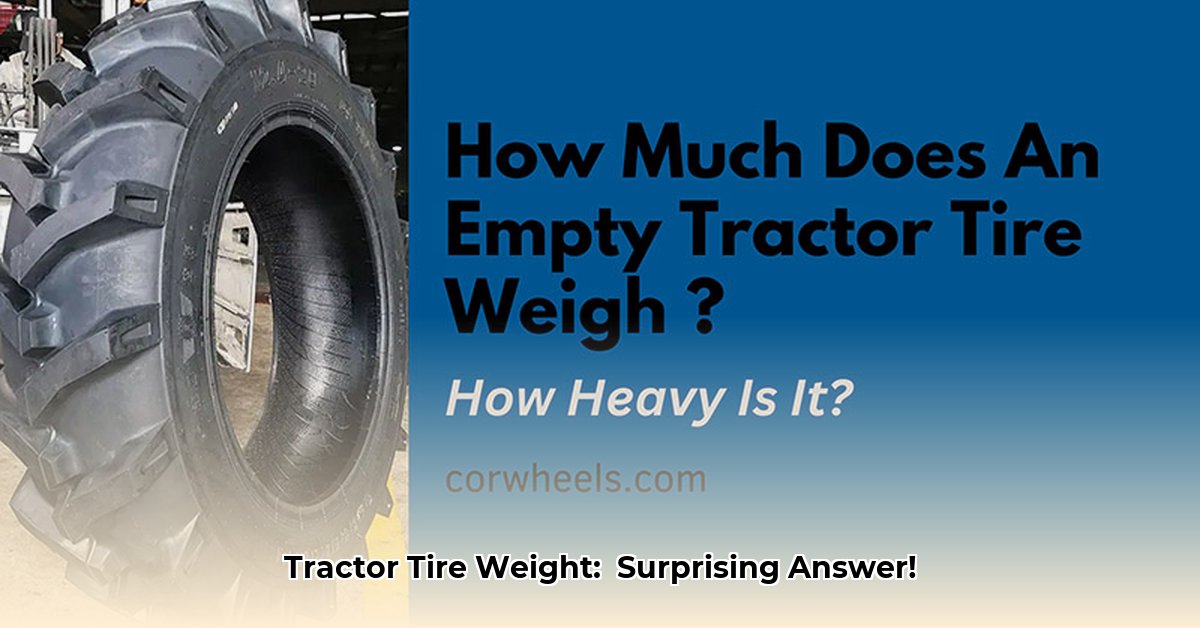
Choosing the right tractor tire weight is crucial for safety, efficiency, and soil health. This guide provides a step-by-step process to help you determine the weight of your tractor tires, considering factors like tire size, ballast, and tire type. For more on vehicle weights, see this helpful resource: tractor weight guide.
Tire Size: A Major Weight Factor
The most significant factor determining a tractor tire's weight is its size. Larger tires designed for heavy machinery will weigh considerably more than those on smaller tractors. Think of it like comparing a semi-truck tire to a bicycle tire—the difference is massive. The tire's sidewall markings (e.g., 18.4R38) contain a code that indicates its size. This code provides all the necessary information needed to find the weight.
Ballast: Adding Weight for Traction
Adding ballast – water, calcium chloride solutions, or other dense materials – significantly increases a tractor tire's weight. This improves traction, especially in wet or muddy conditions. Ballast acts like cleats on a football shoe, providing superior grip and stability. However, excessive ballast can negatively impact fuel efficiency and cause mechanical stress. "Over-ballasting can lead to premature tire wear and increased fuel consumption," states Dr. Emily Carter, Agricultural Engineering Professor at Purdue University.
Tire Construction: Radial vs. Bias-Ply
The tire's construction (radial or bias-ply) also slightly influences its weight. While a smaller difference than size or ballast, understanding this variance ensures improved accuracy in weight estimations. Both types of tires are constructed differently, leading to subtle weight variations even for the same size.
Estimating Tractor Tire Weight: A Step-by-Step Guide
This guide outlines the process for calculating the approximate weight of a tractor tire:
Identify Tire Size: Locate the size code on the tire's sidewall (e.g., 18.4R38).
Consult Manufacturer Specifications: Use the size code to find the unballasted weight in the manufacturer's manual or online resources. This provides the base weight of the tire. This step is critical for accuracy and avoids guesswork.
Account for Ballast: If ballast is used, calculate its weight. Water weighs approximately 8.34 pounds per gallon; for other fluids, consult the Material Safety Data Sheet (MSDS) for the precise weight per unit volume. Accurate measurements are essential.
Convert Units (If Necessary): Ensure all measurements (weight of tire and ballast) are in the same units (pounds or kilograms) before proceeding.
Calculate Total Weight: Add the unballasted tire weight and the ballast weight to determine the total weight.
When Professional Assistance is Needed
For unusual tire sizes or complex ballast systems, seek professional help. Tire specialists possess the expertise to handle such situations accurately. "Don't hesitate to consult a tire professional for complex scenarios," advises John Miller, owner of Miller's Tire Service.
Ballast: Weighing the Pros and Cons
Careful consideration of ballast's advantages and disadvantages is essential to optimize tractor performance:
| Feature | Advantages | Disadvantages |
|---|---|---|
| Traction | Increased grip in challenging conditions | Increased fuel consumption, potential for tire damage |
| Stability | Enhanced control, particularly on slopes or uneven terrain | Extra wear and tear on tractor components, potential mechanical issues |
| Weight | Aids in soil compaction for specific tasks | Requires careful management, adds additional cost |
Calculating Tractor Tire Weight with Ballast Fluid: Refined Approach
Optimal tractor tire weight ensures maximum traction, minimal soil compaction and fuel efficiency. However, different methods exist for calculation, so a standardized, data-driven approach is essential.
Step 1: Determine Baseline Tractor Weight: Weigh your tractor without ballast or added weights. This is your reference point.
Step 2: Estimate Required Ballast: Methods vary, but one approach is weighting per horsepower. This is influenced by the tractor's drivetrain (2WD, MFWD, 4WD). A simplified calculation is: BW = 110*HP - TW (BW = ballast weight, HP = horsepower, TW = tractor weight). Consult your manual or a trusted industry source for machine-specific guidelines.
Step 3: Verify Tire Capacity: Ensure you understand the tire's load capacity (in pounds or kilograms). Never exceed this limit.
Step 4: Select Ballast Type: Fluid ballast (water/antifreeze) offers flexibility; solid ballast (cast iron) provides permanent weight.
Step 5: Gradual Ballast Addition: Incrementally add ballast, weighing the tractor after each addition. This ensures you reach the calculated weight, while continuously monitoring tractor stability.
Step 6: Refine Through Testing: Test in the field and adjust accordingly. Excessive slippage means more weight is needed; instability indicates weight reduction.
Ballasting Methods: A Comparative Overview
| Method | Pros | Cons |
|---|---|---|
| Liquid Ballast | Easy adjustment, even distribution, reduced stress on components | Potential leaks, seasonal limitations (freezing), weight varies with fluid |
| Solid Ballast | Permanent weight, eliminates leaks | Difficult adjustment, reduced maneuverability, higher wear and tear |
Remember, precise tractor tire weight is vital for efficient farming. If unsure, consult a professional!